Why Your Murfreesboro Lawn Turns Brown Every Summer
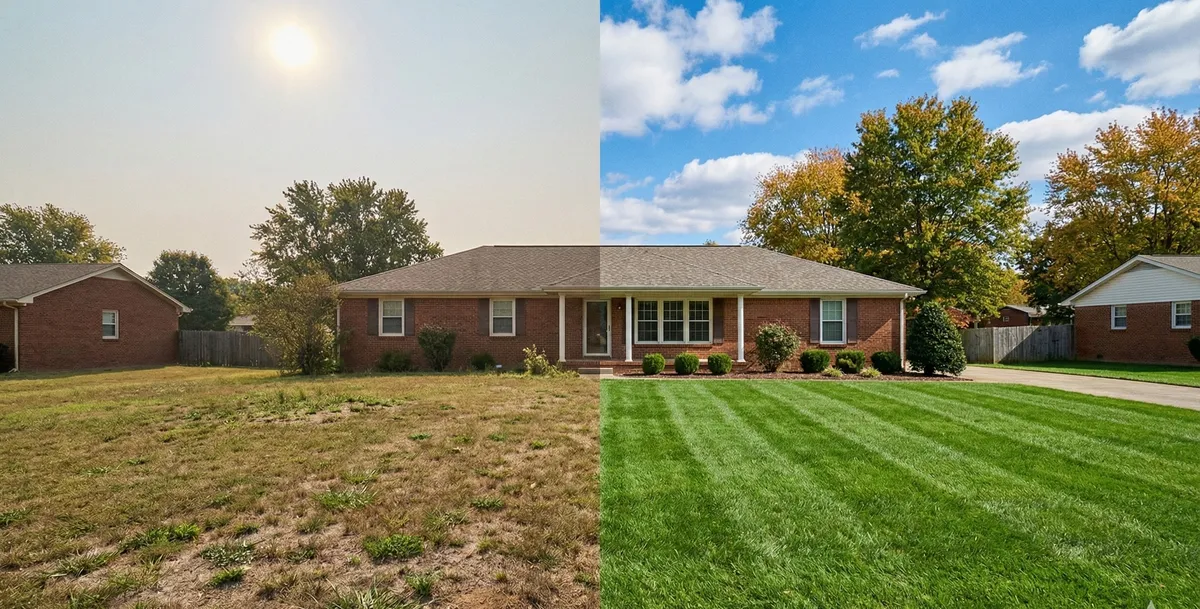
Every July, the calls start coming in. Homeowners across Murfreesboro, Smyrna, and La Vergne want to know what’s wrong with their lawn. It was green and thick in April. Now it’s thinning out, turning brown in patches, and looking rough.
The answer usually isn’t a pest problem or a disease. It’s geography.
The Transition Zone Problem
Murfreesboro sits right in what turf experts call the “transition zone,” a band across the middle of the country where neither warm-season grasses nor cool-season grasses are perfectly suited to the climate.
Cool-season grasses like tall fescue thrive in the 60 to 75 degree range. They love our springs and falls. But when temperatures climb into the 90s for weeks at a time (which happens every summer here), fescue goes into survival mode. Growth slows, color fades, and the plant focuses all its energy on keeping its root system alive.
Warm-season grasses like bermuda and zoysia handle summer heat well, but they go dormant and turn brown from November through March. You trade a green summer for a brown winter.
There’s no grass type that stays green all 12 months in Middle Tennessee. That’s the reality of the transition zone.
What’s Actually Happening to Your Lawn in Summer
When daytime temperatures stay above 85 degrees and nighttime temperatures don’t drop below 70, fescue experiences heat stress. Here’s what’s going on beneath the surface:
- Root systems shrink. Fescue roots can reach 4 to 6 inches deep in ideal conditions, but heat causes them to pull back to just 1 to 2 inches. Shorter roots mean less access to water and nutrients
- The plant stops producing new growth. Energy goes to survival, not expansion. Bare spots don’t fill in during summer
- Moisture demand spikes. The combination of heat, humidity, and wind can pull more water from the soil than the roots can absorb, even if you’re watering regularly
This is normal fescue behavior in our climate. It’s not dying. It’s waiting for fall.
The Mistakes That Make It Worse
Most summer lawn damage in our area isn’t caused by the heat itself. It’s caused by well-meaning homeowners reacting to the heat the wrong way.
Mowing too short
Cutting fescue below 3 inches in summer exposes the soil to direct sun, raises soil temperature, and accelerates moisture loss. I see lawns mowed at 2 inches all summer long, and they look it. Keep the blade at 4 inches during the hot months. The extra height shades the soil and keeps roots cooler.
Over-watering
Watering every day for 15 minutes keeps the surface wet but never pushes moisture deep into the root zone. This trains roots to stay shallow and creates ideal conditions for brown patch fungus, which thrives in our summer humidity.
Instead, water deeply twice a week. Put out about half an inch each time, early in the morning. If you’re not sure how much water your sprinkler puts out, set a tuna can on the lawn and time how long it takes to fill.
Fertilizing at the wrong time
Applying nitrogen fertilizer in June, July, or August forces fescue to produce top growth when it’s already stressed. This burns through the plant’s energy reserves and can actually kill turf that would have recovered on its own in the fall.
Save fertilizer applications for April and October, when the grass can actually use it.
Ignoring fungal disease
Brown patch is the most common lawn disease in Murfreesboro. It shows up as irregular brown circles, sometimes with a darker ring around the edge. It’s caused by a combination of heat, humidity, and excess moisture on the leaf blades.
If you see it, stop watering in the evening, reduce nitrogen, and consider a fungicide treatment. Caught early, the lawn will recover. Left unchecked, it can take out large sections.
What You Can Actually Do
Accepting the transition zone reality doesn’t mean giving up on your lawn. Here’s the approach that works best for Murfreesboro properties:
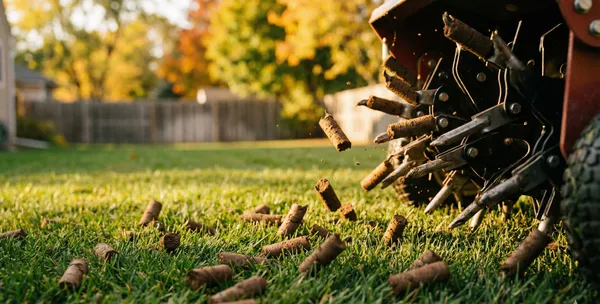
- Invest heavily in fall. Aerate, overseed, and fertilize every September. This is when fescue thrives, and a thick fall stand handles summer stress much better than a thin one
- Mow high all summer. 4 inches minimum. No exceptions
- Water smart. Deep and infrequent, morning only
- Skip summer fertilizer. Let the grass rest
- Stay on top of mulch. A fresh 2 to 3 inch layer in landscape beds reduces soil temperature and conserves moisture around trees and plantings
The best-looking lawns in our area aren’t the ones with the most inputs. They’re the ones where the timing is right and the fundamentals are solid.
The Honest Truth
No lawn care company can make fescue look like a golf course in a Murfreesboro July. If someone promises you that, they’re selling you something your lawn can’t deliver.
What we can do is build a program that keeps your lawn as healthy as possible through the stress months and positions it for a strong recovery every fall. That’s been our approach for over 12 years, and the results speak for themselves.
Have questions about your lawn? Call us at (615) 785-7758 or request a free quote. We’ll give you an honest assessment and a realistic plan.