When to Aerate and Overseed in Murfreesboro: Timing, Process, and What to Expect
If there’s one service I recommend to every single homeowner in Murfreesboro, it’s fall aeration and overseeding. Nothing else comes close to the impact it has on the health and appearance of a lawn.
I’ve been aerating lawns across Rutherford County for over 12 years, and the difference between properties that do this annually and those that don’t is obvious by mid-spring.
Why Aeration Matters in Our Area
Murfreesboro soil is tough to work with. We have heavy clay underneath most properties, especially in neighborhoods like Blackman, Salem, and the Stones River corridor. Clay soil compacts easily under foot traffic, mower weight, and even heavy rain.
When soil compacts, three things happen:
- Water runs off instead of soaking in. You’ll see puddles or runoff during rain, and your irrigation doesn’t penetrate
- Roots can’t expand. Grass roots need air pockets in the soil to grow. Compacted clay gives them nowhere to go
- Nutrients stay on the surface. Fertilizer and organic matter can’t reach the root zone where they’re needed
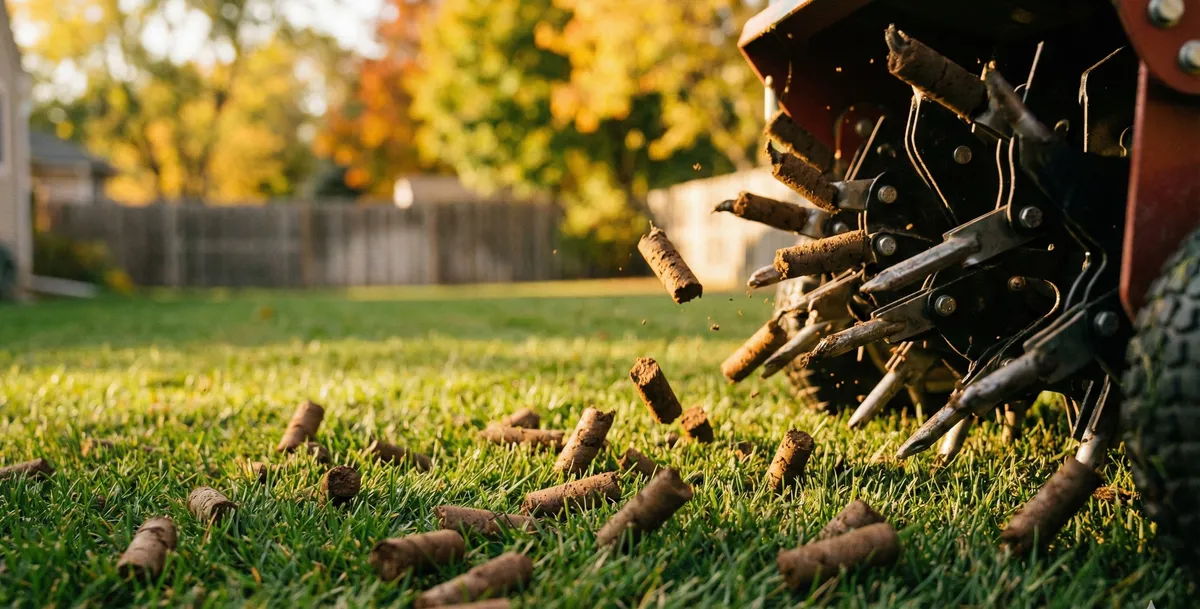
Core aeration punches small plugs out of the soil, creating channels for water, air, and nutrients to reach the roots. Those little dirt plugs you see on the lawn after aeration break down in a week or two and return organic matter to the soil surface.
The Overseeding Connection
Aeration alone helps, but combining it with overseeding is where the real results come from. Here’s why they go together:
Tall fescue, which is the primary grass type in Murfreesboro, is a bunch-type grass. Unlike bermuda or zoysia, it doesn’t spread on its own through runners or stolons. When a fescue plant dies from summer heat stress, disease, or foot traffic, it leaves a bare spot that only fills in if new seed is introduced.
Overseeding after aeration drops fresh seed directly into the holes left by the aerator. The seed has soil contact, protection from wind and birds, and access to moisture in those channels. Germination rates are significantly higher than broadcasting seed on top of an un-aerated lawn.
Over time, annual overseeding builds a thick, dense stand that crowds out weeds, handles summer stress better, and recovers faster from damage.
When to Do It in Murfreesboro
Timing is everything with aeration and overseeding. Too early and the seed germinates into heat that kills the young plants. Too late and the seed doesn’t have time to establish before winter.
The window for Murfreesboro is mid-September through mid-October.
Here’s why this works:
- Soil temperatures drop below 75 degrees, which is ideal for fescue seed germination
- Daytime highs settle into the 70s and 80s, reducing stress on young grass
- Fall rain becomes more reliable, helping keep seed moist during the critical germination period
- Weed competition drops off. Most summer weeds are finishing their life cycle, so new grass faces less competition
In a typical year, I start aerating in the third week of September. If we’ve had an unusually hot September (which happens), I’ll push it back a few days and watch soil temps.
What the Process Looks Like
Here’s what to expect when we aerate and overseed a property:
Before We Arrive
- Mow the lawn short, around 2 to 2.5 inches, a day or two before aeration. This is one of the few times you want to cut low. It lets the aerator and seed make better contact with the soil
- Water the lawn the day before if it hasn’t rained recently. The aerator works best in moist (not soggy) soil. Dry, hard clay is difficult to penetrate
- Flag sprinkler heads and shallow irrigation lines so we can avoid them
The Aeration
We use a commercial core aerator that pulls plugs roughly 2 to 3 inches deep. We make two passes in different directions for maximum coverage. The lawn will be covered in small soil plugs afterward. Leave them. They break down within 7 to 14 days and are actually beneficial.
The Overseeding
We use a high-quality tall fescue blend suited to Middle Tennessee conditions. The seed rate is typically 6 to 8 pounds per 1,000 square feet for overseeding (heavier for bare or thin areas).
Seed is broadcast over the entire lawn using a commercial spreader, then we make a final pass to work it into the aeration holes.
After the Service
This is where the homeowner’s job starts. For the first 2 to 3 weeks, you need to keep the seed moist:
- Water lightly once or twice a day for the first 14 days. The goal is to keep the top half-inch of soil damp, not flooded
- Stay off the lawn as much as possible. Foot traffic on germinating seed reduces your results
- Do not mow until the new grass reaches 3.5 to 4 inches, which usually takes 3 to 4 weeks after seeding
- Do not apply weed killer. Pre-emergent herbicides prevent grass seed from germinating just like they prevent weed seeds. Wait until the new grass has been mowed at least twice before applying any herbicide
What Results to Expect
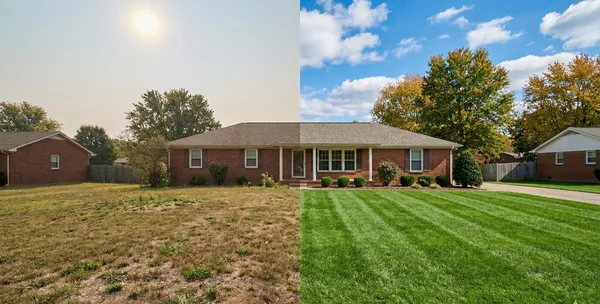
You’ll start seeing new grass blades emerge 7 to 14 days after seeding, depending on temperature and moisture. The lawn will look noticeably thicker within 4 to 6 weeks.
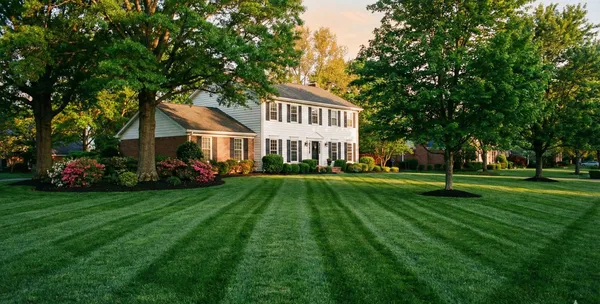
By the following spring, the overseeded areas should be filled in and growing strong. Lawns that get this treatment annually build up a dense turf that naturally resists weeds and handles summer stress significantly better.
Common Questions from Murfreesboro Homeowners
Can I aerate and overseed in spring? You can aerate in spring, but overseeding in spring is risky in our area. New seedlings don’t have time to develop a strong root system before summer heat arrives. Fall is always the better choice for overseeding.
How often should I aerate? Annually for most Murfreesboro lawns. Our clay soil re-compacts every year. Properties with very heavy foot traffic (kids, dogs) benefit the most.
My lawn is mostly weeds. Will overseeding fix it? Overseeding introduces new grass, but it won’t eliminate existing weeds. For heavily weeded lawns, we recommend a weed treatment program starting in spring, followed by aeration and overseeding in the fall. It’s a two-season process, but the results are worth it.
What’s this going to cost? Aeration and overseeding is typically one of the most affordable professional lawn services relative to its impact. The exact price depends on lawn size and condition. Give us a call at (615) 785-7758 for a free quote.
Don’t Wait Too Long
The fall window is short, and our schedule fills up fast starting in late August. If you want to get on the calendar for aeration and overseeding this fall, reach out early. We serve Murfreesboro, Smyrna, La Vergne, Eagleville, and surrounding areas within about 50 miles.
Call (615) 785-7758 or book a free estimate through our website. Your lawn will thank you next spring.